
Power Pages for Customer Service, Field Service, and Sales Portals
Creating a seamless, modern customer experience starts with reducing the back-and-forth. If your customers (or vendors, partners, applicants, members, etc.) still rely on email to submit requests, upload documents, or check their status, you’re creating friction—and your team is stuck managing screenshots and chasing updates.
By connecting Microsoft Power Pages with Dynamics 365 Customer Engagement (Customer Service, Field Service, or Sales), you give external users a secure self-service portal that works directly off your Dataverse data. That means customers can create requests, track progress, add notes, and upload files while your team works the same record inside D365.
Below is why companies choose this approach, the most common use cases, and a practical walkthrough of how Power Pages connects with Dynamics 365.
Why connect Power Pages + Dynamics 365 CE?
Because it eliminates the two biggest operational bottlenecks:
- Customers can’t see what’s happening.
- Your team can’t keep up with the manual communication.
When both sides work from the same Dataverse record, updates become instant, accurate, and automated.
Common Use Cases (What We Implement Most at BCS)
Customer Service Portals
- Case creation + status tracking
- Secure notes and file uploads
- SLA-aligned notifications
- Knowledge articles and FAQs
Field Service Portals
- Request a visit or repair
- Track technician scheduling
- View completed work orders
- Add additional photos or details
Sales & Account Management Portals
- Quote/Order status
- Document exchange
- Approval workflows
- Account-level visibility
Vendor, Partner, or Applicant Portals
- Intake forms and onboarding
- Requirements checklists
- Document submissions
- Progress tracking
These scenarios all revolve around the same thing: external users interacting with D365 data securely, with no custom development required.
What This Integration Actually Improves
- Fewer “Any update?” emails (status is always visible)
- Cleaner data (users update their own info and attachments)
- Better SLA performance (automated routing + notifications)
- Shorter cycle times (no manual copy/paste into D365)
- More professional customer experience (modern, branded, 24/7 access)
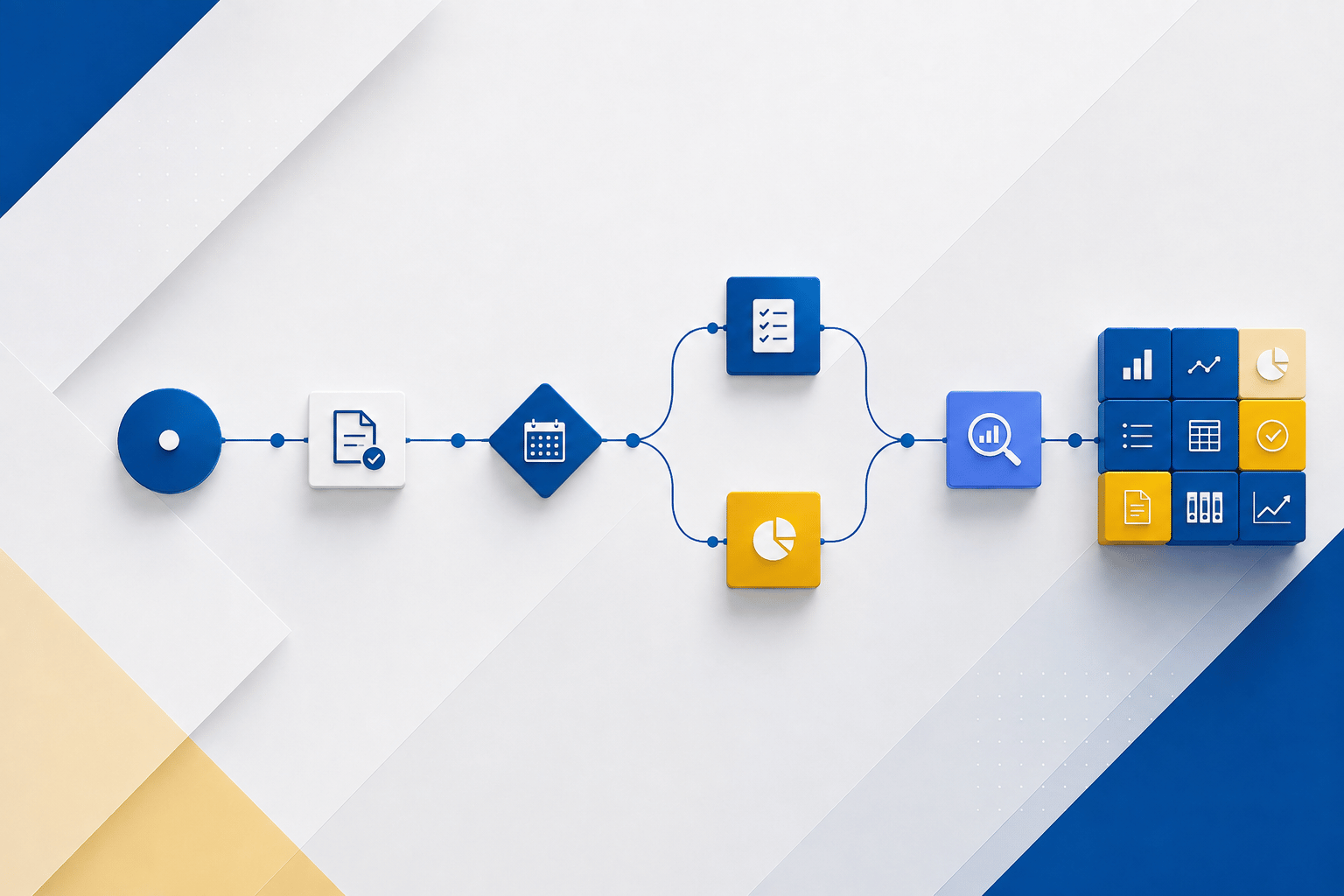
From intake to resolution: Mapping a seamless customer journey (Power Pages + Dynamics 365)
Power Pages + Dynamics 365 lets customers submit requests, track status, add notes/docs, and get updates – while your team works the same record in Dataverse. That’s how you cut “any update?” emails and hit SLAs more consistently.
How to make it click: A smooth self-service experience
- Access that makes sense: Web roles + table permissions so each user only sees their data.
- One record, many moments: Dataverse forms for create → update → view (single or multistep).
- Automate handoffs: Flows for confirmations, routing, and status changes.
Technical Steps (The Quick How-To)
- Create or open your Power Pages site in the same Dataverse environment as Dynamics 365.
- Choose the tables you’ll expose (Cases, Requests, Work Orders, Applications).
- Ensure relationships to Contact/Account.
- Reuse model-driven forms and views.
- Add a Dataverse List (e.g., “My Requests”) and a Form (create/update) to the site.
- Create web roles (Customer, Account Manager), then set table permissions with Contact/Account scope; add child permissions for notes/files if needed.
- Use Power Automate (Dataverse triggers) to send confirmations, notify owners, and update status fields visible on the portal.
- Test with a non-admin test contact:
- Submit
- View only your records
- Verify automations
- Confirm updates reflect immediately.
Learn more (Microsoft Docs): Power Pages security & table permissions
Set table permissions in Power Pages | Microsoft Learn
Thinking About Building a Customer or Partner Portal? BCS Can Help
BCS is a Microsoft Partner specializing in ERP, CRM, and cloud solutions for SMBs. We’ve helped organizations across manufacturing, services, and nonprofit sectors build:
- Customer service portals
- Field service request portals
- Vendor and partner onboarding portals
- Application and intake management portals
- Secure document-exchange portals
If you’re looking to modernize your customer experience—or create a branded, secure Power Pages portal connected to Dynamics 365—we’d be happy to help.