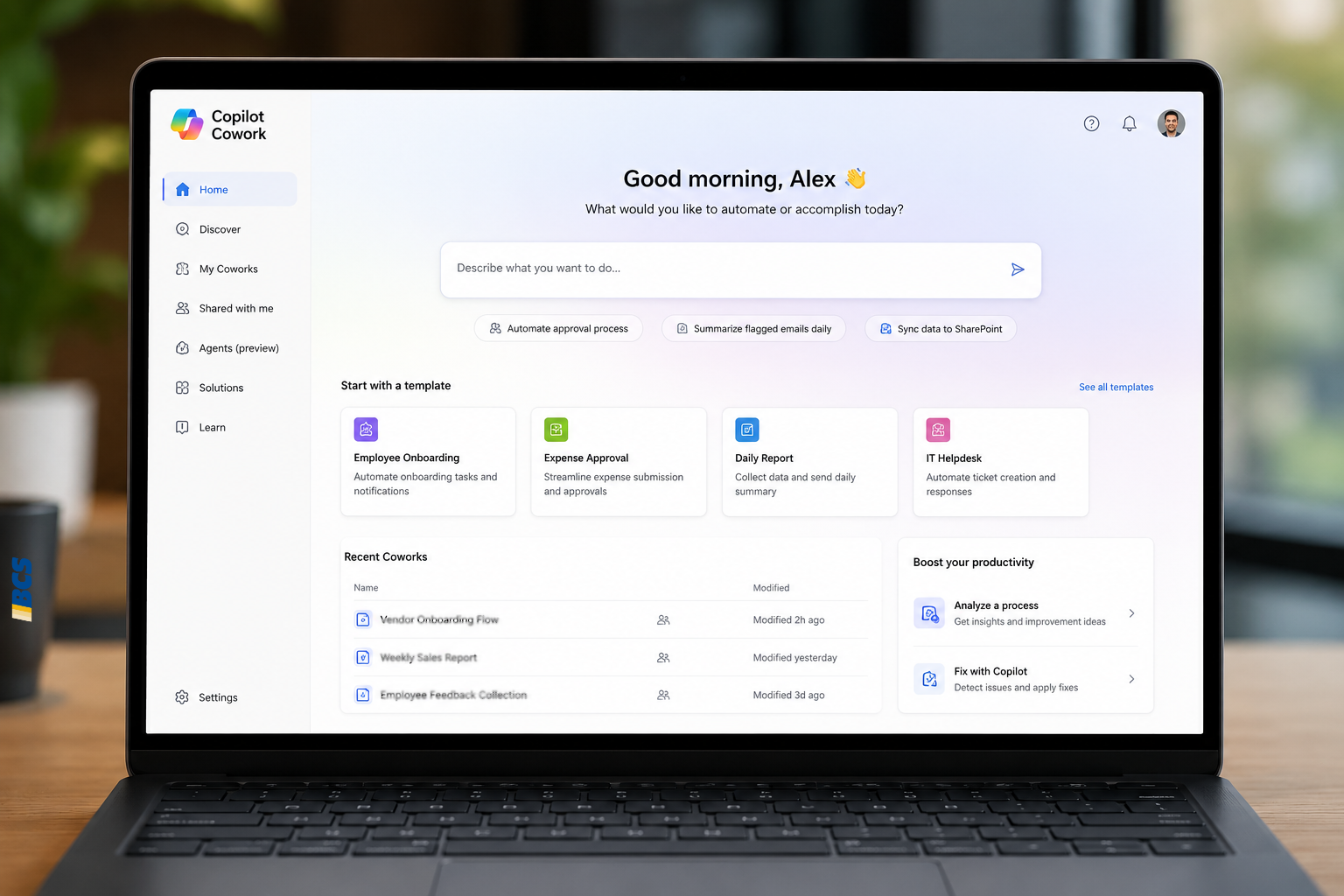

Microsoft recently introduced Copilot Cowork, and I wanted to take a closer look at what it represents in practical terms, especially for business users working across Microsoft 365 and related systems. For those interested in the original announcement, Microsoft has shared additional details in their official blog.
How Copilot Has Worked Up Until Now
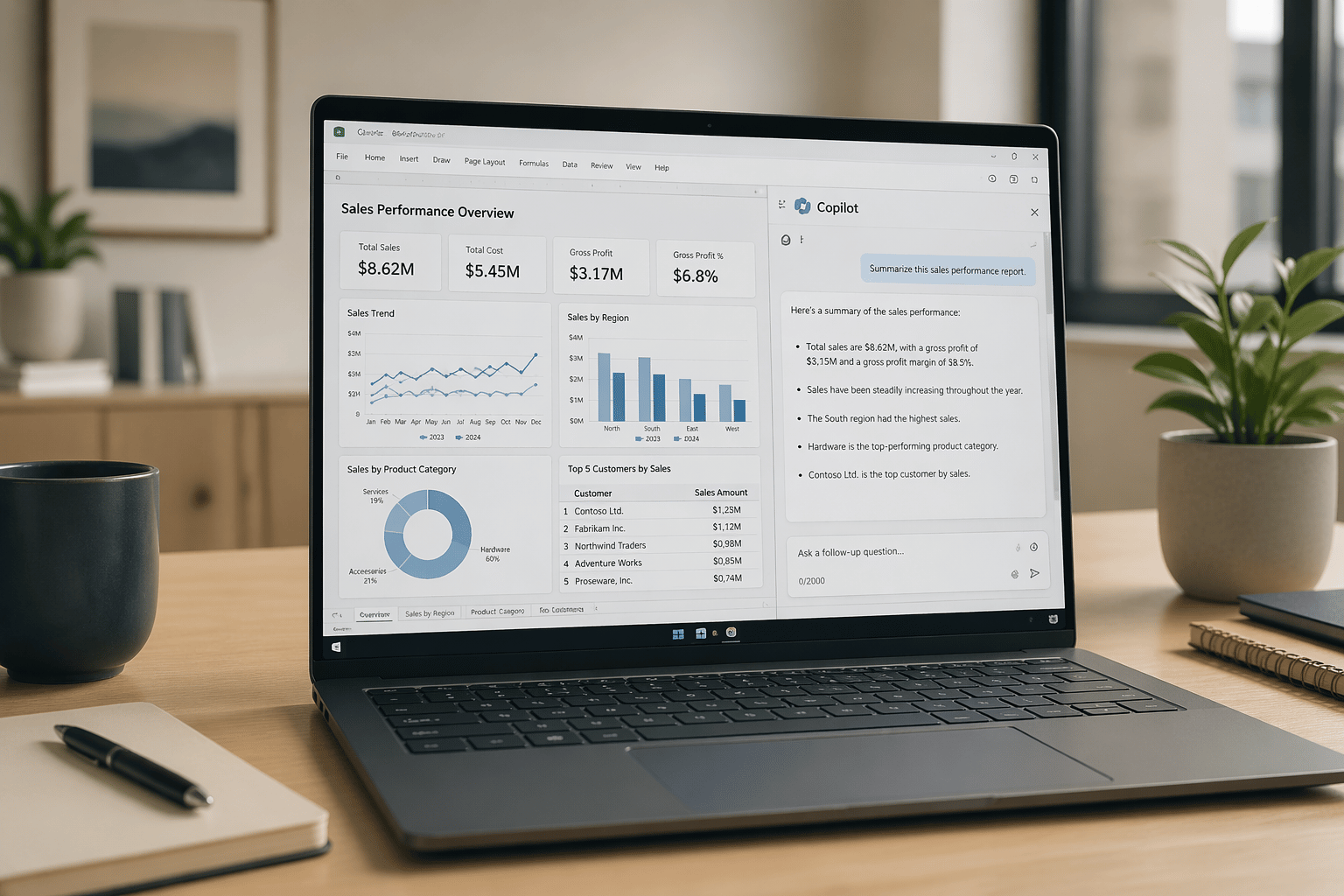
Up until now, Copilot has largely functioned as an assistive tool. A user provides a prompt, and Copilot responds with a draft, a summary, or a suggestion. Typical use cases include drafting emails, summarizing meetings, generating documents, or helping with data in Excel—similar to how many teams are beginning to explore AI within their existing business workflows. As discussed in Why Perfect Data Isn’t Required to Get Started, these early use cases often become the entry point for understanding how AI fits into day-to-day work. This interaction model is still centered around individual requests and responses, where each prompt is handled as a discrete task rather than part of a broader workflow or outcome.
What Copilot Cowork Changes
Copilot Cowork introduces a different interaction pattern. Instead of focusing on a single task, the user describes an outcome they are trying to achieve. Based on that, Copilot can work through a sequence of steps that may span multiple applications and sources of information.
For example, preparing for a client meeting is rarely a single action. It often involves reviewing recent email conversations, locating relevant documents, identifying outstanding items, and organizing key points. In this model, Copilot can assist throughout the broader process rather than handle each step separately.
From Task-Oriented to Outcome-Oriented Work
One way to frame the difference is this: earlier versions of Copilot are primarily task-oriented, while Cowork is designed to be more outcome-oriented. This distinction is important because most day-to-day business activities are not isolated tasks, but combinations of smaller steps that require context and coordination.
From a functional perspective, this approach relies on Copilot’s ability to access and interpret information across tools such as Outlook, Teams, Word, Excel, and other connected systems. It also implies longer-running interactions, where the system may perform multiple actions before presenting a result, rather than responding immediately to a single prompt.
In terms of availability, Copilot Cowork is currently in a research preview and is being tested with a limited set of customers. Broader access is expected through Microsoft’s Frontier program starting in late March 2026.
For general business users, this means access will likely come in phases rather than as an immediate rollout. Microsoft is also positioning these capabilities alongside its new Microsoft 365 E7 offering and related agent platform components, which are expected to reach general availability around May 2026.
Where Copilot Cowork Is Useful in Practice
There are a few areas where this model could be relevant in a business setting. Activities such as meeting preparation, follow-up coordination, information gathering, and basic task organization often involve switching between applications and manually connecting pieces of information. These are scenarios where a more integrated, multi-step approach can be useful.
Limitations and What to Consider
At the same time, it is important to consider the current limitations. If the output still feels generic, the issue is often missing business context, which we explore in Why AI Sometimes Feels Off (Even When You Have the Data). Business processes that depend on strict rules, approvals, or regulatory requirements will continue to rely on structured systems and controls. In environments such as ERP or finance, where data accuracy and auditability are critical, this type of capability would typically complement existing processes rather than replace them, particularly in systems like Business Central, where accuracy, structure, and process control are central to how work gets done. These are areas where AI can support decision-making and reduce manual effort, but still operate alongside defined workflows and controls.
Another factor is data access and governance. Since this model depends on pulling information from across an organization’s environment, permissions and data boundaries play a significant role. The effectiveness of the output is directly tied to the quality and accessibility of the underlying data.
From an implementation perspective, this does not eliminate the need for defined processes or automation. Traditional tools like Power Automate remain essential for predictable, rule-based execution. See How Power Automate Replaces Manual Work Most Teams Forget Exists for practical examples. The difference is that Copilot Cowork is positioned to assist in areas where processes are less structured and require interpretation.
Overall, Copilot Cowork represents an evolution in how users interact with systems—from executing individual steps to describing outcomes and working across them.
For business users, the real impact will depend on how well this approach aligns with existing workflows, data structures, and governance requirements. In practice, that often comes down to how clearly processes are defined and how accessible the underlying data is.
As these capabilities continue to develop, the opportunity isn’t just to adopt new features, but to better understand where AI can support real work and where structure, controls, and human judgment still play a critical role.
If you’re evaluating how tools like Copilot fit into your broader Microsoft environment, it’s worth looking at how these capabilities connect to your existing systems and processes not just what they can do in isolation.
For a practical view of how these technologies fit together, read From Power Automate to Microsoft Copilot.
Want to explore how this could apply to your environment?
Talk to our team or learn more about Copilot.