New Year, Smarter Work: Get 1 Month Free Copilot | Now $21/User.

April 18, 2022

How Do I Change the Value of a Fixed Asset

If you have the need to change the value of an asset that was already put into service, you can change the value of the asset by following the steps below:

As usual, we suggest having a SQL Server database backup of the company database on which you will be working; have a DBA or IT person help you with this process.

Before you begin, we suggest having these steps run after running the GL posting routine to clear out any GL activities that may get rolled into the GL entries created by these next steps.

  • Open the Asset Book window (Cards >> Fixed Assets >> Book) and then enter, or select, the asset and book for which you will be adjusting the value.

  • Adjust the Cost Basis field to the new value.

  • Save the change by clicking the ‘Save’ button.
  • Click Yes on the depreciation recalculation option and select ‘Life’ in the Reset depreciation option.
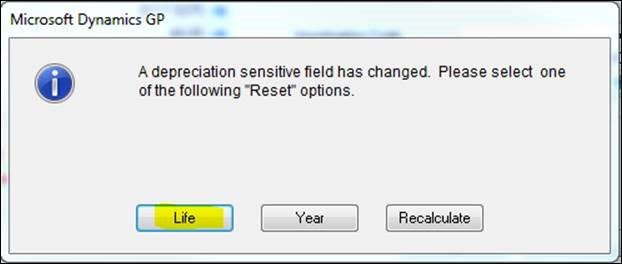
This option selected will back out all the depreciation that had previously been posted and calculate the new depreciation rates based on the new value.

  • Run the Depreciation routine through the last period where depreciation had been run most recently.
  • Run the GL Posting routine to book the GL activity backing out and incorporating the new cumulative depreciation amounts on the same GL entry; the net amount will reflect any differences between what had been booked versus what should have been booked to the GL as a catch-up entry.
  • Look up and review the fixed assets batch within the Financial series (Transactions >> Financial >> Batches).
  • If everything looks to be in order, post the batch.

For more information about Dynamics GP or any other product in the Dynamics pantheon, please reach out to us at Support@BondConsultingServices.com or click here to schedule a free consultation with one of our experts!

Share On: 

Other articles

Why Distribution Hand-Offs Break (and How Connected Operations Fix Them)

Jennifer Ryan

|

December 18, 2025
Inside distribution companies, most problems don’t come from bad people or broken intentions. They come from gaps in the hand-offs between teams.As a Controller, I used to think our issues…

Unlocking Insights: Power BI Integration with Dynamics 365 Business Central

Joel Trinidad

|

December 16, 2025
As businesses increasingly rely on data to drive decisions, Microsoft continues to enhance the synergy between Dynamics 365 Business Central (BC) and Power BI. With the release of Business Central Version 26, users now…

The Spreadsheet Trap in Distribution: Why You Lose Control Without Realizing It

Jennifer Ryan

|

December 11, 2025
Let me start with a confession: I love a good spreadsheet. They’re flexible. Fast. Familiar. Elegant.But here’s the problem no one talks about: Spreadsheets eventually become the system. And that’s…

How to Connect Power Pages & D365 Customer Engagement for a Seamless Self-Service Experience

Marisa Mini

|

December 4, 2025
Power Pages for Customer Service, Field Service, and Sales PortalsCreating a seamless, modern customer experience starts with reducing the back-and-forth. If your customers (or vendors, partners, applicants, members, etc.) still…

How to Tell if Your Distribution Business Has Outgrown Its Systems

Jennifer Ryan

|

December 1, 2025
As a former Controller inside a fast-moving distribution business, I learned this lesson the hard way: You don’t realize your system is breaking until growth exposes every weakness.It doesn’t happen…

Why Microsoft Killed Social Posting (And Why SMBs Should Care)

Jackie Gant

|

November 25, 2025
When Microsoft quietly pulled the plug on social posting in Dynamics 365 Customer Insights late last year, few in the small to mid-sized business (SMB) space raised an eyebrow. After…