Microsoft Copilot $21 now $18/user/month + 1 month free

June 30, 2022

How-To Setup Sales and Inventory Forecasting in Business Central

Microsoft has provided an extension on Sales and Inventory Forecast using Azure AI. Azure AI is already connected to Business Central.

This app is pre-installed in the Business Central cloud version. But it needs to be setup and configured. Once it is setup and configured, it will help us future forecast of the Inventory based on past Sales history.

Step 1: Using the Global search, search for “Sales and Inventory Forecast Setup

Step 2: Set required parameters, Period Type, Horizon, historical Periods, API URI and API Key

Step 3: For this example we will be setting these values.

Period Type: Months

Horizon: 12 (months)

Historical Period: 6 (months)


Continue with these steps to obtain the API URI and the API key.

Step 4: Open Azure AI Gallery

Step 5: Select “Open in Studio (Classic)”
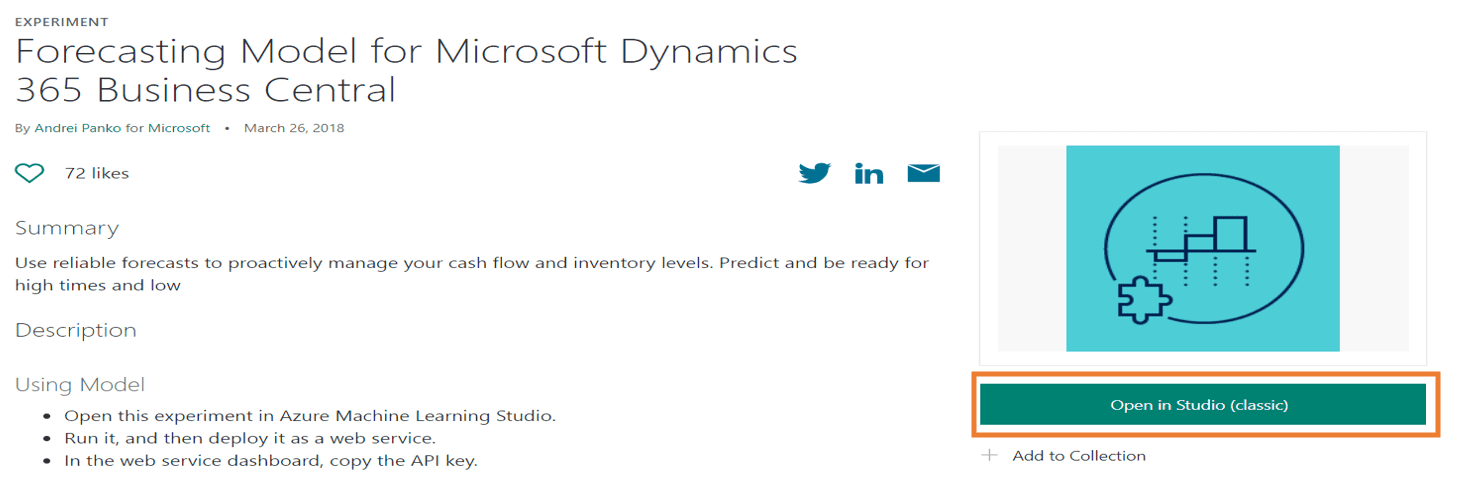
Step 6: Continue into the workspace

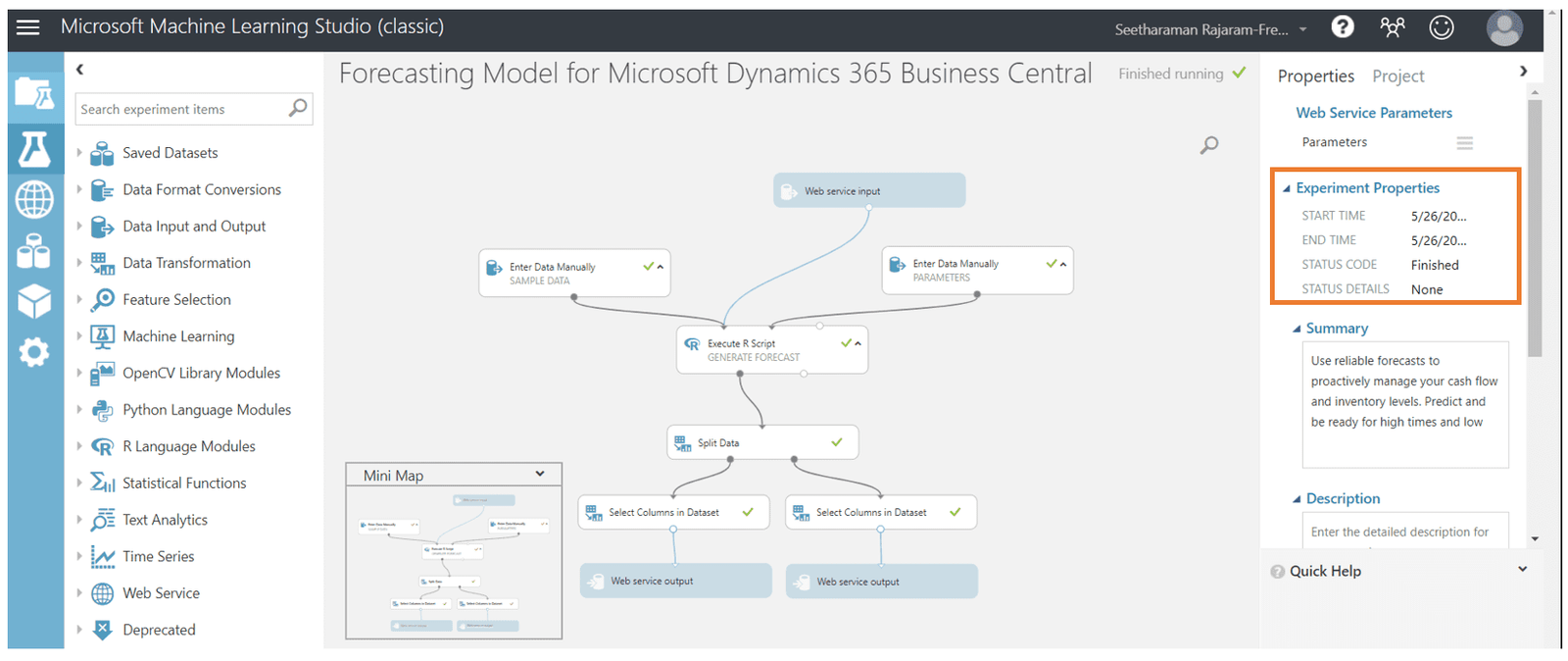
Step 7: Here you can see the workflow copied from the gallery.

Step 8: Save the workflow.

Step 9: Select “Run.”

You can see the forecast is queued and then runs in the background.

When it has finished you will see this.
Step 10: Select “Deploy Web Service”

Step 11: Copy the API key

Step 12:  Paste that API key into the Sales and Inventory Forecast Setup window from before.

Step 13: Select Request/Response

Step 14: Copy the API URI from the highlighted box below and paste into the appropriate record in the Sales and Inventory Forecast Setup window from before.

Step 15: After inputting all the correct parameter values, select “Update Forecast” in the Sales and Inventory Forecast Setup window.

Step 16: Now the Calculated Forecast is visible for all inventory items.

For any questions on this process please reach out to us at Support@BondConsultingServices.com or schedule a free consultation with one of our experts.


Share On: 

Other articles

Why Waiting for Perfect Data Means Never Starting with AI

Zoltan Orban

|

February 10, 2026
This post is part of our Microsoft Copilot, Explained series, which starts with everyday productivity tools like email and meetings before expanding into broader workflows and AI agents."Our data isn't…

Just Get Started: How Teams Are Actually Beginning with Microsoft Copilot

Clayton Jones

|

February 5, 2026
Getting started with Microsoft Copilot doesn't require perfect data, months of planning, or enterprise-scale resources. Small and medium-sized businesses running Microsoft 365 and Dynamics 365 Business Central are finding that…

Why Copilot in Outlook Beats Standalone AI Email Tools

Joel Trinidad

|

February 4, 2026
This post is part of our Microsoft Copilot, Explained series, which starts with everyday productivity tools like email and meetings before expanding into broader workflows and AI agents.Tools like ChatGPT…

Microsoft Copilot vs Copilot Chat vs Full Copilot

Joel Trinidad

|

February 3, 2026
This post is part of a series, Microsoft Copilot, Explained, which begins with productivity tools and building toward business workflows and AI agents. If you’ve been hearing more about Microsoft Copilot…

Microsoft Copilot for Operations vs Executives: Same Tool, Different Value

Zoltan Orban

|

January 29, 2026
Most conversations about AI in business stay at a high level: “It will transform how we work.”That might be true, but as someone who spends most days in the details—fixing…

Dynamics 365 Real-Time Journeys Explained: The “For Dummies” Version

Jackie Gant

|

January 26, 2026
Remember those bright yellow For Dummies books from the 2000s? This post is a throwback in that spirit: plain language, no fluff. If you’ve been hearing about Microsoft’s “Real-Time Journeys”…