Where ROI actually shows up from finance efficiency to operational visibility
Forrester says Business Central delivers 200% ROI. But what does that actually look like in practice? A recent Total Economic Impact™ study commissioned by Microsoft found that companies using Microsoft Dynamics 365 Business Central achieved:
- More than 200% ROI over three years
- Six-month payback
- Over $680K in total benefits
You can explore the full findings in the Forrester Total Economic Impact™ study.
Those are strong numbers. But they’re also easy to misinterpret. ROI it comes from how the business actually uses it, not from the software alone.
What those numbers look like for growing companies
For a $50M manufacturer, ROI doesn’t show up as a single line item. It shows up in how the business runs day to day.
For teams coming from QuickBooks, spreadsheets, or a patchwork of systems, the shift is usually immediate:
- Finance teams spend less time reconciling and more time analyzing
- Reporting moves from reactive to real-time
- Leadership gets visibility into margins, projects, and cash flow
For operations teams dealing with MRP, inventory planning, and production workflows:
- Planning becomes more reliable
- Data is consistent across departments
- Decisions happen earlier before issues become expensive
And for companies scaling quickly:
- Systems don’t need to be replaced every few years
- New processes don’t require new tools
- Growth doesn’t introduce the same level of operational friction
That’s where ROI actually shows up, not just in cost savings, but in how efficiently the business can operate and scale.
Where ROI actually comes from
The headline numbers are compelling. But they don’t happen automatically. In our experience, ROI from Business Central comes from three things:
1. Standardizing processes
Disconnected workflows are one of the biggest hidden costs in growing companies. When finance, operations, and reporting are aligned in a single system, teams spend less time fixing data and more time using it.
2. Consolidating systems
Many companies we work with are running:
- An older ERP
- Spreadsheets
- Point solutions for reporting, planning, or operations
Bringing those into a single platform reduces complexity, lowers overhead, and improves visibility across the business.
3. Creating an AI-ready foundation
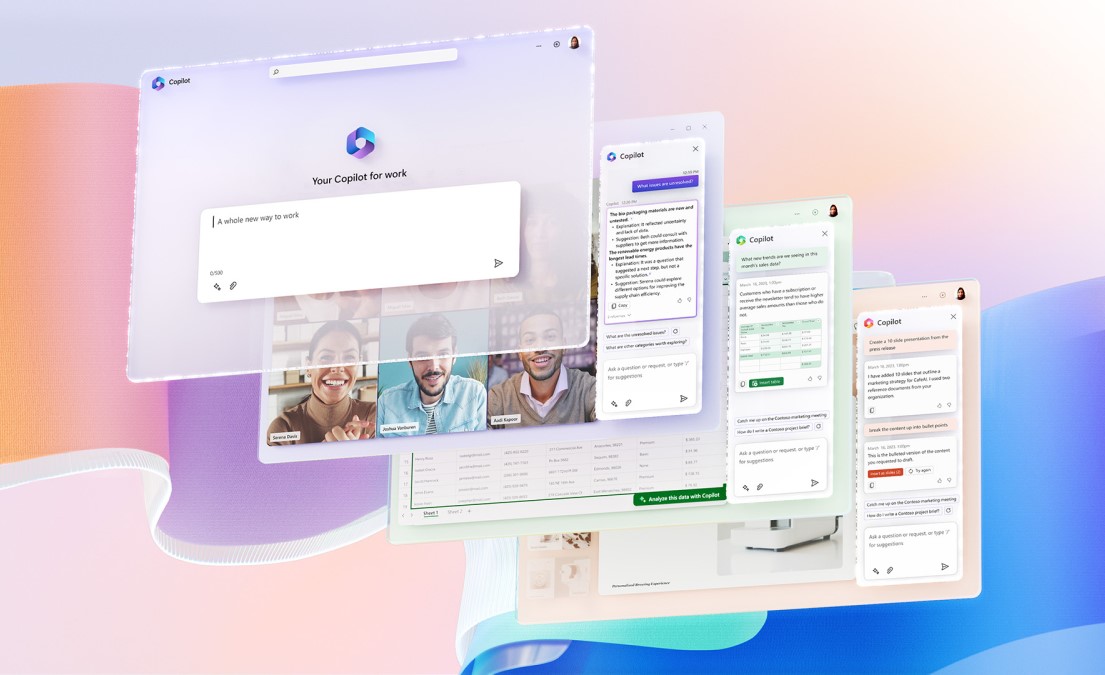
AI doesn’t deliver value on top of messy data. Business Central works because it creates a clean, connected system. And, tools like Copilot, Power BI, and automation can actually produce useful outputs.
Why most ERP projects don’t hit these numbers
This is the part most studies don’t cover. We’ve seen companies invest in ERP and still struggle to realize meaningful ROI. It usually comes down to a few things:
- Trying to replicate old processes instead of improving them
- Over-customizing too early
- Treating ERP as a technical implementation instead of a business transformation
The result is a system that works, but doesn’t actually change how the business operates.
What has to be true to see a 6-month payback
A six-month payback is possible, but only under the right conditions. Typically, that means:
- Clear alignment on business objectives (not just features)
- Willingness to adopt standardized processes
- Focus on high-impact areas first (finance, reporting, operations)
- A partner who understands both the technology and the business context
When those pieces are in place, ROI accelerates quickly.
The bottom line
The Forrester study validates what many growing companies are already seeing: Modernizing finance and operations on a unified platform can drive real financial impact. But the real question isn’t whether 200% ROI is possible. It’s whether your business is set up to achieve it.
The full Forrester Total Economic Impact™ study goes deeper into the financial model and assumptions behind these numbers.
If you’re evaluating Business Central
If you’re evaluating Business Central or trying to understand what ROI could look like for your business, we’re happy to walk through it with you.
Not in theory. In the context of your systems, your processes, and your growth goals.